What were the key differences between runway Y2K fashion and everyday street style?
Real Y2K fashion was a chaotic, experimental mess that most people who lived through it remember with equal parts nostalgia and cringe. While Instagram presents a sanitized, pink-tinted version of millennium style, the authentic experience was far more aggressive and unapologetically flashy than today's curated interpretations suggest.
Understanding the true millennium aesthetic requires examining the dramatic divide between what designers showed on runways and what people actually wore on the streets—two completely different worlds that shared little beyond the calendar year.
The Great Divide: High Fashion vs. Mall Culture in 2000s
Runway Millennium Style: High-Concept Experimentation
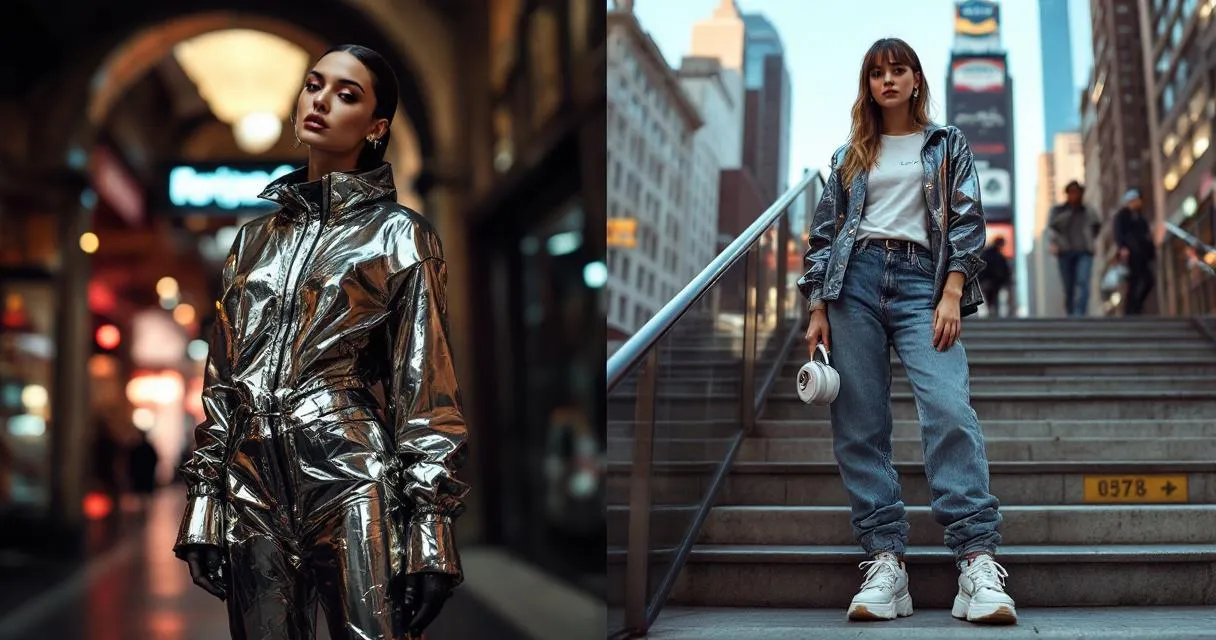
Runway collections during the millennium era were all about making statements. Designers pushed boundaries with dramatic silhouettes and experimental prints. They created pieces that prioritized spectacle over wearability—butterfly tops, sequined mini dresses, and bedazzled looks that demanded attention.
Fashion houses treated the millennium as permission to go completely over-the-top. Materials like shimmery denim and metallic fabrics became luxury elements. Camouflage prints appeared on haute couture runways. The aesthetic drew from clubby, edgy vibes that were meant to shock and inspire discussion.
Key runway elements included:
- Extreme low-rise bottoms that defied physics
- Metallic and holographic fabrics as primary materials
- Deconstructed denim pieces reimagined as art
- Futuristic silhouettes with space-age influences
- Maximum skin exposure through strategic cutouts
Recent fashion weeks have paid homage to this era. Versace and Blumarine's SS23 collections featured Paris Hilton modeling pieces that captured the era's maximalist aesthetic. Balenciaga's Fall 2024 runway acknowledged millennium influence while maintaining the drama that defined high-fashion style.
Authentic 2000s Fashion Trends: Mall Culture and Community
Meanwhile, everyday street style operated in a completely different universe. This was fashion centered on what you could actually buy at the mall—brands like Guess, Polo Ralph Lauren, Banana Republic, and PacSun.
Street style reflected real life. It was about hanging out with friends, not making avant-garde statements. The aesthetic drew heavily from R&B and hip-hop scenes, with Aaliyah's 1996 Tommy Hilfiger collaborations serving as major inspiration.
Common street style combinations:
- Popped-color polos with khaki cargo pants
- Oversized hoodies layered over fitted tank tops
- Velour tracksuit trend worn as complete outfits, not just gym wear
- Comfortable sneakers that could handle actual walking
- Accessories that were flashy but functional
This was fashion for community and belonging. As trend forecaster Jessica Richards notes, mall fashion 2000s represented "safe" comfort and connectivity in ways that contrasted sharply with runway fashion's experimental edge.
The Electric Color Palette: What People Actually Wore
Colors That Defined the Era
Millennium fashion embraced colors that could be seen from space. The authentic palette was electric and unapologetic:
Primary colors:
- Electric blue that glowed under any lighting
- Lime green that made neon signs look subtle
- Hot pink in the most saturated shade possible
- Metallic silver that reflected everything
- Holographic finishes that shifted in the light
Supporting colors:
- Orange so bright it hurt to look at directly
- Purple in deep, rich tones mixed with metallics
- Black used as contrast for maximum pop
- White employed strategically in belts and accessories
Instagram's modern revival focuses on soft pastels and muted tones. This completely misses the point. Original millennium fashion wasn't subtle or Instagram-friendly—it was designed to make you impossible to ignore.
How Colors Were Actually Combined
The rule was simple: if it clashed, it worked. Electric blue pants with lime green tops. Hot pink accessories with silver everything else. Metallics mixed with neon mixed with animal prints.
This wasn't color theory—this was color chaos, and it was glorious. The goal was maximum visual impact, whether you were walking through the mall or dancing at a club.
Celebrity Excess: When Stars Defined Early 2000s Fashion Myths
Iconic Celebrity Fashion Moments That Defined an Era
Millennium celebrities didn't just follow trends—they created fashion moments that are still referenced today. These looks were so extra they became legendary.
Britney and Justin's Denim Disaster (2001): Their matching head-to-toe Canadian tuxedos at the American Music Awards proved that coordinating couples' outfits could reach previously unimaginable heights. This wasn't just fashion—it was performance art.
Christina Aguilera's "Stripped" Era: Leather chaps worn as pants, not over them. Baby tees crop tops that defied physics. Hair extensions in colors that don't occur in nature. Every red carpet appearance was a master class in maximum exposure with maximum accessories.
Paris Hilton's Juicy Revolution: Pink Juicy Couture tracksuits became a uniform for aspiring socialites worldwide. Hilton proved that comfort and luxury could coexist, as long as everything was bedazzled.
The Bling Culture Phenomenon
Rappers like Nelly made fashion statements out of Band-Aids. P. Diddy's white parties featured guests in ivory ensembles that cost more than most people's cars. The philosophy was simple: the bigger the chain, the more successful you appeared.
Female celebrities competed in an arms race of tiny purses and giant sunglasses. Accessories weren't accents—they were the main event. Grillz weren't just jewelry—they were investment pieces that announced your status from across the room.
Essential celebrity-inspired pieces:
- Chains thick enough to anchor boats
- Sunglasses that covered half your face
- Purses too small to hold anything practical
- Platform flip flops that added serious height
- Butterfly hair clips in impossible quantities
Y2K Fashion Social Media vs Reality: Instagram's Fantasy
What Social Media Gets Completely Wrong
Today's Instagram revival is a sanitized version that misses the era's chaotic energy. Modern interpretations focus on clean lines and carefully curated "vintage" pieces that often cost more now than they did originally.
Instagram interpretations typically feature:
- Soft pink and lavender color schemes
- Carefully matched accessories
- Vintage pieces styled for maximum aesthetic appeal
- Clean, minimal backgrounds
- Professional photography that makes everything look intentional
Authentic millennium style actually looked like:
- Colors that clashed intentionally and beautifully
- Accessories layered without regard for coordination
- Mall-bought pieces mixed with whatever you could find
- Blurry disposable camera photos in chaotic settings
- Nothing was minimal—maximum was the minimum
The Community Factor Instagram Can't Capture
Original millennium fashion was inherently social. It was about belonging to groups and expressing identity within communities. You wore what your friends wore, with personal variations that showed your individual style.
This community aspect is what Instagram revival misses most. Social media focuses on individual aesthetic choices, but genuine millennium fashion trends were about collective expression and shared cultural moments.
The "hang" aesthetic that defined mall culture—comfortable clothes for spending hours with friends—gets lost in Instagram's focus on individual style moments designed for likes rather than living.
The Key Technical Differences
Silhouettes: Extreme vs. Comfortable
Runway silhouettes pushed every proportion to extremes. Ultra-low-rise bottoms met impossibly cropped tops. Wide-leg pants were warehouse-sized. Platform shoes added actual architectural height. Everything was about creating dramatic shapes that photographed well under professional lighting.
Street silhouettes prioritized comfort within trendy parameters. Low rise jeans history shows they were still low, but wearable for hours at the mall. Baggy jeans 2000s were roomy but not costume-sized. Platform sneakers added height without requiring professional balance skills.
Fabric Choices: Innovation vs. Accessibility
Runway materials treated every piece as an experiment. Holographic leather, laser-cut denim, metallic mesh, and fabrics that seemed borrowed from space suits. These materials were chosen for visual impact and innovation, not daily wear.
Street materials focused on what you could actually afford and maintain. Regular denim with interesting washes, cotton blends that could survive washing machines, and synthetic materials that looked expensive but weren't.
Construction Philosophy: Art vs. Function
Runway pieces were constructed like art installations. Seams became decorative elements. Closures were reimagined as design features. Wearability was secondary to making visual statements.
Street fashion prioritized function within style boundaries. Clothes needed to survive daily wear, washing, and active social lives while still capturing the era's aesthetic energy.
Y2K Clothing What People Actually Wore: Everyday Essentials
The Real Wardrobe Essentials
White belts weren't just accessories—they were mandatory equipment. Wide, patent leather, and worn with absolutely everything. The shinier and more reflective, the better. These belts tied together looks that might otherwise fall apart visually.
Baggy pants with attitude came in tribal prints, flame patterns, and abstract designs. These weren't just loose-fitting—they were architectural in their volume. Cargo pockets could hold entire other outfits.
Layered tank tops created the foundation for most looks. Fitted tanks in contrasting colors worn under mesh tops, over sports bras, or as the main event with maximum accessories.
Platform sneakers were non-negotiable footwear. Skechers dominated, but any brand that could add two inches of height while remaining walkable worked. Metallic finishes were preferred but not required.
Hair and Beauty: Maximum Impact
Hair meant commitment to extremes. Frosted tips for guys weren't suggestions—they were requirements. Face-framing highlights for women came in colors that don't exist in nature. The bigger the hair, the better the look.
Makeup focused on dramatic contrasts. Dark lip liner with lighter lipstick created definition that could be seen across crowded rooms. Body glitter was applied liberally to any exposed skin, which was usually substantial.
Accessories were applied with more-is-more philosophy. Chunky silver chains (multiple), hoop earrings large enough to use as bracelets, and rings on every available finger. Subtlety was reserved for other decades.
Cultural Context: Why Millennium Fashion Made Sense
Technology Optimism Meets Fashion Freedom
The millennium represented unlimited possibility. Technology was advancing rapidly, the economy was booming, and cultural mixing was creating new aesthetic languages. Fashion reflected this optimism through fearless experimentation.
Both runway and street styles embodied the belief that the future would be better, brighter, and more exciting than anything that came before. Clothes should reflect that energy, whether through high-concept runway pieces or accessible mall interpretations.
Music's Massive Influence
Hip-hop, pop, and R&B dominated cultural conversations. Artists like Aaliyah, Destiny's Child, and Eminem weren't just making music—they were creating visual languages that fans translated into everyday fashion.
Music videos provided style inspiration that bridged runway innovation with street accessibility. Seeing your favorite artist in low-rise jeans and metallic tops made those choices feel both aspirational and achievable.
The Mall as Cultural Hub
Shopping malls weren't just retail spaces—they were community centers where fashion happened in real time. Style choices were made collectively, influenced by friends, store displays, and the social dynamics of shared spaces.
This mall culture created fashion democracy. Everyone could participate in trend interpretation, whether they had runway budgets or part-time job paychecks. Accessibility became a feature, not a limitation.
Early 2000s Fashion Myths Debunked: Modern Lessons
What We Lost in Translation
Today's fashion landscape prioritizes careful curation and brand consistency. The millennium's fearless mixing of incompatible elements—athletic wear with evening accessories, ethnic-inspired prints with space-age materials—created visual excitement that feels risky now.
The community aspect of fashion decision-making has been replaced by individual aesthetic choices designed for social media approval. Original millennium fashion was inherently social and collaborative.
What We Can Reclaim
The era's willingness to experiment without apology offers valuable lessons. Fashion rules existed to be broken. Self-expression mattered more than professional approval. Comfort and style could coexist, whether in high-fashion interpretations or mall-culture applications.
Modern applications might include:
- Mixing textures without fear of clashing
- Embracing color combinations that feel risky
- Prioritizing personal expression over trend perfection
- Choosing comfort within stylistic boundaries
- Building community around shared aesthetic choices
Millennium Veterans Speak: Reality Check Time
Nostalgia Meets Honest Assessment
People who actually lived through millennium fashion have complex relationships with its revival. There's genuine fondness for the era's fearless experimentation, but also recognition that some trends died for good reasons.
"I loved my flame-print baggy pants at the time," says one fashion survivor, "but looking back at photos, I realize I looked like I was wearing pajamas designed by someone having a fever dream."
The white belt phenomenon particularly triggers memories. Everyone had them. Everyone wore them with everything. No one can adequately explain why they seemed so essential at the time, but they absolutely were.
What Actually Worked (And What Didn't)
Successful elements:
- Mixing high and low fashion created unique personal style
- Accessible interpretations of runway trends democratized fashion participation
- Bold color choices encouraged creative self-expression
- Community-based style decisions built social connections
Problematic aspects:
- Extreme proportions weren't flattering on most body types
- Fast fashion cycles created environmental problems we're still addressing
- Some trends prioritized shock value over actual aesthetic appeal
- Disposable fashion mentality encouraged wasteful consumption
The True Legacy of Teen Fashion 1999 and Beyond
Beyond Instagram Aesthetics
Strip away nostalgic filters and social media sanitization, and millennium fashion represents a unique cultural moment. Technology optimism, economic prosperity, and cultural mixing created space for maximum self-expression through clothing.
Whether expressed through runway's high-concept experimentation or street style's community-oriented mall culture, millennium fashion created a visual language that was uniquely optimistic. The future looked bright, so fashion should reflect that energy.
Bridging High and Low Culture
The era's most lasting contribution might be its successful democratization of fashion innovation. Runway ideas became accessible through mall culture interpretations. Street style influenced high fashion in unprecedented ways. The boundary between designer and everyday fashion became more fluid.
This cross-pollination created opportunities for broader cultural participation in fashion conversations. Style became more inclusive, even when the results were sometimes questionable from today's perspective.
Ready to embrace authentic millennium style? Start with one statement piece that captures the era's fearless spirit—a chunky metallic belt, platform sneakers, or electric blue accessories. Remember, whether you're channeling runway drama or street style comfort, subtlety was never the goal. Go bold, go bright, and don't forget that millennium fashion was ultimately about having fun with clothes while building community through shared aesthetic adventures.
The key is understanding that authentic millennium style wasn't about looking perfect—it was about looking fearless. Choose pieces that make you feel confident enough to take up space, whether you're recreating runway innovation or mall culture accessibility. Mix textures, embrace color, and remember that the best looks were the ones that made people stop and stare, for better or worse.